The Second Birthday

The Second Birthday

September 3 marked two years since my perfect Baby Sloane was born still. My son told me he didn’t want to go to the cemetery to visit Sloane’s grave because it makes him sad. And because it makes me sad. Truth be told, I don’t like going there either. I wish I didn’t have a grave to visit. I wish she were here with us. I wish I could just stop thinking about her, stop reliving the horror and trauma of the day she came into the world, stop what-iffing myself over and over again. I wish I could just forget it ever happened and move on with my life. But you know what? I can’t. Why? Because she’s my baby. She came from my body and she’s a part of my family. She literally pops into my head a hundred times a day, just as often as my son does. I can’t forget her, or move on, or pretend she didn’t exist. So I do my best to keep her memory alive and make her proud of me. I write about her, I speak publicly about her birth and our experience with the medical system and care providers, I make donations in her name, I buy all the keepsakes, I add her name to memorial items, because that’s all I can do.

Instead of having our friends and family over for Sloane’s 2nd birthday, I put flowers on her grave, bought myself a birthday cake that I like, and tried to enjoy the beautiful boy I have the privilege to raise. It’s so beyond unfair that this is my reality, and it hurts knowing that I am one of millions of parents who know this heartbreak.

This life is beautiful and cruel and above all else, bittersweet.

Happy 2nd birthday, Baby Sloane 💜 I love you and miss you more than words can say

It’s Not Just a Miscarriage

It’s Not Just a Miscarriage

I follow a lot of loss accounts on social media, and one of the most common phrases that those who have suffered a miscarriage hear is “at least it was early.” I actually heard this one myself when I had my first trimester miscarriage, and even though I know it wasn’t meant to belittle my experience, it did. When I saw those two pink lines on that pregnancy test, my entire life changed. I was growing a human, I was now someone’s mother, I vowed to love and protect that little being.

I immediately looked up my due date and started thinking about what the weather would be like when he or she was born. I was due in September, so that could mean hot Summer-like temperatures, or chilly Autumn ones. Of course, there were a million questions that needed to be answered. What would it be like to bring a newborn to my family’s Thanksgiving dinner, and how much fun would our first Christmas as a family of three be? How would we announce to our friends and family that I was pregnant? Would we find out the gender? Should we have a baby shower before or after the baby is born? Oh, and I can’t forget NAMES. So many names went on a list in my little notebook. As soon as I got that positive pregnancy test, I started planning for life with a baby.

For weeks, I had felt incredibly nauseous and tired, until one day I just didn’t anymore. My gut told me this was a bad sign, but I brushed it off because what did I know? This was my first pregnancy, after all. Then, at my 13 week prenatal screening ultrasound when the technician stared stonefaced at the screen without saying a word, I knew something was wrong. I nervously asked her if there was “anything in there”, and she replied “well, not what I would expect to see at 13 weeks.” She told me she was going to bring my husband in to sit with me while she tracked down a doctor. A few minutes later she came back in, and told us to go see my midwife at the clinic right away – she was expecting us. I had only just seen her the day before, and she hadn’t been able to find a heartbeat on the Doppler. She had tried to reassure me by saying that I may not have been as far along as I had thought, and told me not to worry, but I knew. I can’t say I was surprised when she held my hands in hers and said “I’m so sorry, but your baby has passed. There’s no heartbeat.” I asked her why, and all she could say was “sometimes these things just happen.” She gave us a minute alone and I just burst into tears as soon as she closed the door.

I was given the option to go home and wait for ‘things to happen naturally’ or book an appointment with an OB who could schedule a D&C. I opted to wait it out because a D&C seemed so final to me. After days, and then weeks, of nothing happening and being pushed aside by my family doctor, I took myself to the emergency room to ask for the D&C. The doctors and nurses there were so compassionate and kind – something I didn’t know I needed at that time. I was admitted and given misoprostol to induce contractions before my D&C in the morning. I ended up needing morphine for the pain because the contractions were so intense. Before I was put under, the OB performing the D&C held both my hands in his and said “I’m so sorry we have to meet this way. I hope we will meet again under better circumstances.” That tiny bit of kindness has stuck with me, and literally brings tears to my eyes as I type this almost 9 years later.

It took me a few days to feel better physically, but emotionally was another story. Most of the women I had spoken to about their miscarriages made it seem like it wasn’t that big of a deal. It was so common, you know ‘1 in 4’ and all that. I was devastated, and I didn’t know anyone else who had expressed that, to me at least, so I felt very much alone. I had support, of course, but I didn’t have anyone to say that it was normal to feel the way I felt. It hit me hard when friends started announcing their pregnancies. It hit me all over again when my due date came in September, and at Christmas without our first baby.

You see, it’s not just a miscarriage. It’s not just an early pregnancy loss that can be forgotten about once you have another baby. It’s a baby that was wanted, a life that was planned, dreams that were shattered. The heartbreak did taper off over time, but I still think about the baby that could have been. I still wonder if we would have had a boy or a girl. I imagine my living son as a little brother instead of our first-born. I even wonder if we would have him at all if our first baby had lived.

Back to Normal

Back to Normal

One thing I hear often these days is how people want to get “back to normal” after Covid-19. Since March 2020, most of us have been in some form of lockdown, some have been unemployed or working from home, some have really struggled with isolation, while others have thrived (and learned how to make sourdough everything). I didn’t take on any new hobbies, or learn any skills, because I felt that growing a person was enough of a project to work on during a global pandemic.

Now that the majority of our adult population has been fully vaccinated, people want to get back to what they’ve missed out on over the past 18 months – traveling, concerts, parties, weddings and even funerals. While I’ll gladly admit that I do miss some of these things, I really have no idea what “back to normal” even means after a loss. I mean, this blog is called before and after Sloane because it was and is such a monumental event that it has forever divided my life into two parts. If she hadn’t died, I’d like to think I would be just as excited to get back into the mix as everyone else, as tricky as that would be with a young baby. But she did die, and I can’t go back. The world as I know it has indelibly changed. It’s now a world where a pregnancy test doesn’t guarantee a happy ending, where a perfect anatomy scan doesn’t mean that your baby will come home. It’s a world where cemeteries have a section just for babies.

I have changed, too. I am no longer the same person I was before my heart was shattered. I am less patient, less focused, more forgetful. I have less energy, lower self-confidence, more anxiety. The thought of going to a party and making small talk is kind of terrifying if I’m being completely honest. What if I meet someone new and they ask me about my family? What if someone I do know doesn’t ask me how I’m really doing? What if they do?

For me, at least, there is no going BACK to normal. I have to find a new normal, as cliché as that sounds. I have to find a way to honour Sloane while continuing to move forward. I have to keep telling her story so that she doesn’t get left in the past when everyone else moves on.

There’s a saying I found that goes something like “Don’t tell a grieving person to look to the future, because their person is missing there, too.” If I can’t go back, and moving on isn’t possible, I think I’ll stay right where I am for a little while longer.

The Gold Standard of Care

The Gold Standard of Care

If you read my first post about my placental abruption, you’ll know that I arrived in the emergency room by ambulance in the middle of the night. The paramedics had been back and forth about which hospital to take me to, and I pleaded with them to take me to the hospital I was registered with, and where my midwife was at the time. She met me there with two L&D nurses and the OB/GYN on call. I received the gold standard of compassionate care at that hospital. My nurses and midwife had obviously dealt with pregnancy and infant loss before I came along, and they knew what to say, and what not to say, to grieving parents. A gentle hand on the shoulder, steady eye contact, no assumptions made, no asinine questions or platitudes – these made all the difference to me. They made sure to tell me that I didn’t do anything wrong – I didn’t cause my placental abruption. This was not my fault. It was not fair. They made sure to repeat everything they told us because we could only hear or comprehend half of what was said amidst the haze of shock. One of the nurses asked if our baby had a name yet, and unsure if I could bring myself to use the name I had wanted to use for our daughter I said “well, it was going to be Sloane, but….” and she replied “Then that is her name.” It wasn’t meant to be pushy. It was more like a confirmation. From that point on, our baby was referred to as Sloane, and not “the baby” or “your baby”. Sloane. I didn’t realize how meaningful that was until much later.

Every step of the way, we were asked what we wanted, what we needed. Did we want Sloane to be bathed? Did we want her to be bathed in the room or should they take her to another room? Did we want her to be weighed, and did we want to know her weight? They confirmed the spelling of her first, middle and last name before we left so her records were accurate. We were told that we could stay as long as we needed to, and that we could keep Sloane with us however long we wanted, and when we were ready a nurse would come get her – but if we wanted to see her again before we left, we just had to ask.

We had a social worker come see us to explain what our options were as far as maternity leave, burial arrangements, support and services that were available for us and for our son. She provided some reading material and asked if it was ok for her to follow up in a couple of days. I really appreciated that she checked in afterwards. She was the one who suggested we arrange for a photographer to come take photos of Sloane, which we had originally declined, but later agreed to. She said “even if you never look at them, you should have them taken.” She was right. The professional photos are so beautiful, and I am so grateful to have them.

The typical postpartum care period is six weeks. When you’re under the care of a midwife, most of those visits occur in the comfort of your own home. This is a major benefit of midwifery care, as it means parents don’t have to bundle up a newborn in all kinds of weather and get to a doctor’s office for an appointment. When you’ve lost your baby, it means you don’t have to go to an office where there might be pregnant women or newborns in the waiting room. Because I didn’t have a newborn who needed to be monitored, I wasn’t sure if I would still be considered a client of my midwife’s, or if I would still receive that postpartum care. I was, and I did. Thankfully. My midwife was sure to check in every day at first, then every few days, then every two weeks, and she was always available by phone if I needed her. She made sure I was eating, resting, receiving support, and taking care of myself. She made sure I knew that my milk would come in even though there wasn’t a baby to feed, and what my options were when it happened. She let me cry without telling me it was going to be ok. She explained grief and loss to me in a way that made sense, and told me that everything I was feeling was normal. One of the best things she did for me was provide a debrief a couple of weeks after our loss. Hearing her version of events filled in a lot of the holes in my memory.

In speaking with other bereaved parents, I know that not everyone receives the same standard of care, or the level of compassion that we were shown. I have heard from parents who were not treated very fairly, or were brushed aside, or rushed out of the hospital with no information on how to get support for their physical or mental health. What my husband and I went through on that day was traumatic and heartbreaking, but we were treated with genuine compassion, respect, care, and concern. Our experience would have been so much worse had we not felt seen or heard by our care team. I have spoken on a few parent panels as part of compassionate care workshops offered to healthcare providers, because I feel that it’s important that they understand how much of an impact they have on bereaved parents and their experience. I have found that I can get through telling Sloane’s story without crying, until I speak about my midwife and nurses and how they treated me. How they made the worst experience imaginable better for us. How they somehow made it easier. For that, I am eternally grateful.

My loss

My loss

Trigger warning: this story is graphic and heartbreaking, and I share it for many reasons.

  1. Telling my story helps me get it out of my head, not that it means I stop thinking about it (far from it)
  2. I hope that it will help others who have experienced loss to know that they are not alone in their loss or their grief. That loss, sadly, happens often and we can all benefit from a sense of community
  3. Many of my friends and family have never heard this story, for a variety of reasons, and this is my way of sharing with them
  4. I want my baby girl, Sloane Joy, to be remembered. She matters, she is loved, she is missed

My pregnancy was relatively normal and uncomplicated, besides that whole global pandemic thing happening in the background. No big deal. I was seeing a midwife, as I had for the birth of my son in 2016. Appointments were spread out farther than they typically are, but as I said, everything was normal and uncomplicated. At 20 weeks, we found out we were having a baby girl. I was overjoyed to say the least. It was always my dream to have two children, a boy and a girl. My son was so excited to become a big brother, even though he insisted that the baby in my belly was a baby brother. I wondered if maybe the ultrasound technician was wrong, or perhaps kids really do have that sixth sense about things, and that I would find out for sure when baby was born. Even though there were no causes for concern, I was hesitant to buy any baby items until I was much further along in my pregnancy. I had had an early missed miscarriage a few years before my son was born, so I knew that the risk was there. Once I passed each of the crucial pregnancy milestones of 20 weeks, then 26, then 30, then 36 weeks, I finally started to get more and more excited about baby girl joining our family. We discussed names, I started stocking up on diapers, wipes, clothes, and made a birth plan. I started to prepare my son for life with a newborn baby. We had maternity photos done.

I was working from home during the pandemic, so I was home when I started having contractions at 38 weeks. They didn’t feel anything like they did when I went into labour with my son. The best way to describe them would be like a combination of Braxton-Hicks and active labour contractions – my belly was rock hard, making it hard to breathe, but they lasted for minutes at a time before finally easing off, only to roll right into another one. I was nauseous, I had hot flashes, I got dizzy when I stood up. I just felt off. When my husband got home from work, I told him that we should prepare to go to the hospital just in case this was labour, but that I really wasn’t sure since it felt so different. I put my son to bed as usual, made sure everything was ready to go in my backpack and diaper bag, and I called my midwife. She was already at my chosen birthing hospital with another family, but didn’t seem too concerned about my symptoms. She suggested I have a bath and try to relax, as she said that real labour contractions would continue, but Braxton-Hicks should ease off. The bath helped, the pain eased off, and I was able to hear my baby’s heartbeat on the Doppler so I went to bed.

I woke up at 3am to a sharp pain in my belly, and then of course I had to pee, because ya know I was 38 weeks pregnant. As soon as I sat up, I felt a gush which I assumed was my water breaking. As soon as I turned on the lamp, I saw the blood and started to panic. And it just. kept. coming. I knew it was a lot of blood, but I was hoping that baby girl was ok. I called my midwife, who was still at the hospital, and she suggested I call an ambulance. When the paramedics came into my bedroom, I remember asking them to be quiet because my son was asleep in his room. The last thing I wanted was for him to see me leave in an ambulance, and see all the blood on my bed. The ambulance was freezing, so I asked for a blanket. The paramedic checked my belly with a stethoscope and said he heard baby’s heartbeat. My husband had to wait for my mom or brother to arrive to stay with our son, but we had to get to the hospital.

I was wheeled through the entire hospital on a stretcher, thankfully it was empty due to COVID. My midwife and two nurses met me in the ER. I barely heard the paramedic give someone my vitals. One of the nurses removed the blanket, cut off my blood-soaked pajamas and inserted an IV. She tried to find a heartbeat on the Doppler. Nothing. They paged the OB/GYN and she rushed in, and tried to find the heartbeat on the ultrasound. Again, nothing. The OB put her hand on my shoulder and said “I’m sorry, your baby has passed. Your placenta has detached from your uterus. We need you to deliver her now, so we can stop the bleeding and save your life.” All I could say was “what?” And with that, they wheeled me across the hall to a delivery room. If you’ve read this far, I’m going to warn you that this next part may make you cringe, especially if you’ve delivered a baby and know about cervical dilation. The OB had (very painfully) checked my cervix in the ER and said I was about 8cm dilated, so when she told me I needed to deliver my baby, I knew that it wasn’t humanly possible to deliver a baby at 8cm. Was it? She (very painfully) checked me again and told me I had to push. I think I was in shock. I know I said “I can’t. I’m not ready” and she said very calmly “you need to.” And a few minutes later, my beautiful and perfect, still and lifeless baby girl was wrapped in a blanket and placed in my arms. I sobbed with my whole body. My husband wasn’t with me. I looked up at my midwife and said “this isn’t fair” and all she could say was “I know.” My midwife left to go find my husband to tell him what had happened. Some time later he came into the room crying and just hugged me said “I love you” as I cried “I’m so sorry.”

The next few hours were filled with phone calls, social worker visits, the typical postpartum physical checks, all while one of us held our beautiful baby girl. She was given a bath and put in a pink onesie, and wrapped in a knitted blanket that must have been donated. The nurses took photos of her, made footprints, wrote her birth stats down on a little pink card. When the nurses changed shifts at 7am, they cried when they said goodbye to us. Because of COVID restrictions, I couldn’t hug them, or even see their faces. One of them told the incoming nurse that I needed to have a shower to wash all the blood off my body. My iron was dangerously low from the blood loss, but thankfully I didn’t need a transfusion.

We were told we could stay with our girl as long as we wanted, and when we were ready to let her go, the nurse would come take her away. We were told that we could see her again before we left if we wanted to. It was around 9:30am when we decided it was time. How we even came to that decision, I’ll never know. I knew that holding her lifeless body wouldn’t bring her back. I knew that letting them take her away from me didn’t make it less real. It just made it more final. It was very strange laying in the hospital bed in so much physical pain without a baby to hold. Of course when you deliver a living baby, the oxytocin kicks in and relieves some of that pain. I got Advil instead. Most moms are given a shot of pitocin in the thigh after birth to help the uterus contract and expel the placenta. I was given carbetocin in my IV to prevent hemorrhaging.

A few hours later, after some more physical checks, I was walked out of the hospital carrying a small beige box with a gold embossed butterfly on it instead of my baby. It was hot out. It felt like I had been inside the hospital for days or even weeks, when in reality it had been less than 12 hours. My son was so happy to see me after waking up without me there for only the second time in 4 years. Then I had to tell him the heartbreaking news that his baby sister died, and that she wasn’t coming home. He was rightfully confused, concerned about me and the pain I was in, and scared. Thankfully the social worker had given me some advice about how to explain death to him in a way that he would understand, and she warned me that children his age would ask questions, the same questions, over and over again until it made sense.

Over the coming days and weeks, I would learn more about what happened to me and why. I suffered what is called a severe placental abruption, wherein my placenta completely detached from my uterus, and was actually delivered with my baby, instead of after her. My midwife told me I didn’t have any of the risk factors typically associated with placental abruptions – illicit drug use, domestic violence, vehicle or horseback riding accident – it was just a fluke. An extremely rare and heartbreaking fluke. So rare in fact that my midwife later told me that neither she, nor the two labour & delivery nurses had ever seen a severe abruption such as mine in their careers. So why did this happen? Nobody knows. My baby girl was perfect. She met all of her growth milestones in the womb. There were no concerns about genetic disorders or abnormalities. I’d had a healthy and uncomplicated pregnancy. There were no warning signs. We decided against an autopsy because we knew it wouldn’t show anything definitive. The baby didn’t cause the abruption, and we didn’t want her to be cut open. We wanted her to remain intact, in her perfection, for eternity.
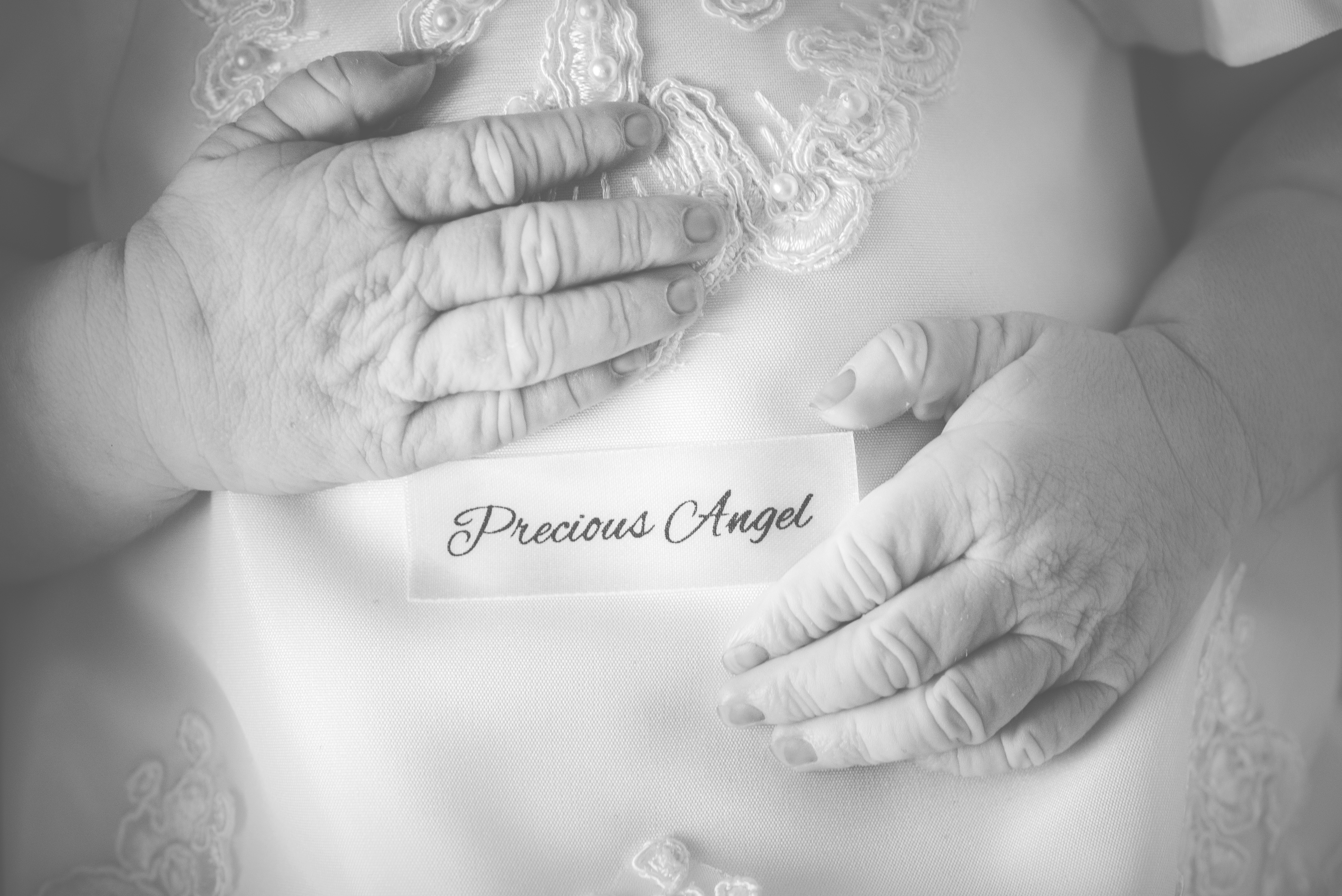
Sloane Joy ~ September 3, 2020 ~ 4:21am ~ 7lbs 7oz

May she rest in peace